How This Started

The Unruly Garden began in September 2026 for a fairly practical reason: I wanted to grow my own greens.

After seeing recalls involving fresh produce and reports of parasite contamination in greens, I decided I’d rather grow some of my own food, especially leafy greens that I could keep producing through the fall and winter.

It sounded simple enough.

I started with a 8×4 raised bed beside the shed.

That required cardboard, sticks and woody material, old grass and compost, straw, soil, manure, and repeated trips for more dirt. Somewhere along the way, ChatGPT and I stopped referring to these as “layers” and started discussing the stratigraphy of the garden bed, as though future archaeologists would someday excavate it.

Then one garden bed became another garden bed, this time for root vegetables.  That bed is 4×3 and on the other side of the shed.

And then I started thinking about vegetables people used to grow, the old varieties and forgotten food plants that largely disappeared from modern gardens. Suddenly I was ordering skirret, scorzonera, rampion, Good King Henry, sea kale, salsify, corn salad, miner’s lettuce and other plants that sound more appropriate to a medieval monastery garden than a suburban backyard in Tennessee.

So the project evolved again.

What began as “I think I’ll grow my own winter greens” somehow became an experiment in growing food from the past, improving the soil, composting directly in the beds, planting fruit and berries, making room for wildlife, and seeing just how much food and life I can coax out of my little piece of ground.

This blog is mostly here so I can keep track of it all: what I planted, where I planted it, when I planted it, where the seeds and plants came from, what worked, what spectacularly failed, and all the creatures that decided to move in along the way.

Because apparently I have a medieval garden now.

That escalated quickly.


Making Room for the Fruit Trees

​

Today was less about planting things and more about removing things that had absolutely no invitation to be here in the first place.

Along the fence line, I have a collection of volunteer bushes, vines, little trees, and assorted greenery that has basically been allowed to do whatever it wanted for years. Most of it doesn’t flower, doesn’t produce anything useful, and has gradually taken over a surprising amount of space.

Now I need that space.

I have fruit trees coming, including two columnar peach trees, two fig trees, and I also have a dwarf everbearing mulberry that needs a permanent home. Once I started looking at the fence line as potential growing space instead of just that mess back there, I realized there is actually quite a bit of usable room.

So out came the cutting tools.


I’m clearing the volunteers, opening up the area to more sunlight, and figuring out exactly how much space I have for the fruit trees. I’m not clearing everything—I still want the back of the yard to stay somewhat wild for the birds, frogs, turtles and everything else that uses it—but plants that aren’t doing much for me or the wildlife can make way for things that will.

There is also another benefit.

Clearing along this particular fence should make my neighbor happy because she apparently has strong feelings about leaves, vegetation, and the general concept of nature occurring near her property.

Unfortunately, it means I can see more of her ass-ugly fence.


There are sacrifices in gardening.

Eventually, though, there should be fruit trees and other plantings along here, so perhaps I’ll get my greenery back—only this time it will be greenery I actually chose.

Skirret and Chives


The skirret has arrived.

This is probably the point where I have to admit that the garden has officially gotten weird.

I ordered skirret roots, an old vegetable that was once commonly grown in Europe and has mostly disappeared from modern gardens. You eat the clusters of sweet roots, and unlike most of the root vegetables I’m growing, skirret is a perennial, so if it likes it here, this isn’t necessarily a one-season experiment.

Considering what I paid for the roots, it had BETTER like it here.

The skirret is going into the root vegetable bed, which has basically been built around it at this point. Nothing like buying an obscure medieval vegetable and then constructing dedicated real estate for it.


The chives arrived too.

I’m not entirely sure why I bought chives. I’m not even particularly fond of chives. But apparently at some point during this gardening spiral I decided I needed them, so now I have chives.

They’ve been planted in the main garden bed.


Grid System


The main garden bed is getting a grid system.

Since I’m trying to keep track of exactly what I plant, where I plant it, and when, dividing the bed into one-foot squares makes a lot more sense than my previous gardening method of put it somewhere over there and hope I remember later.

The grid will let me use square foot gardening spacing with the Seeding Square, but more importantly, it gives me an actual address for everything in the bed.

I’ll be able to map the whole thing and keep a record of what was planted in each square, when it went in, where the seeds or plants came from, and eventually how well they did. As things are harvested and replanted, I’ll also be able to keep track of what occupied each space throughout the season.

This should become especially useful once all of the old and medieval seeds start going in, because I have already reached the point where looking at a patch of tiny green seedlings and thinking I’m sure I’ll remember what those are would be wildly optimistic.

Eventually I want a proper illustrated map of every garden bed showing exactly what’s growing where.

Root Bed Set Up


The next garden bed is going in.

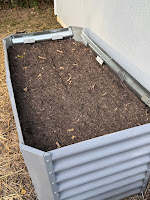
This one is a 4×2 raised bed that I’m setting up specifically for root vegetables. The plan is carrots, beets, parsnips, radishes, turnips, and some of the stranger old vegetables I’ve somehow accumulated since this whole thing started.

Most importantly, this is where the skirret is going.

Skirret is an old root vegetable that was once commonly grown and eaten in Europe but mostly disappeared from modern gardens. I ordered actual skirret roots to plant rather than starting it from seed, and apparently these things are not cheap.

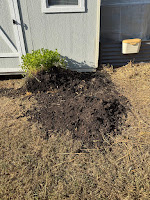
Fortunately, I already had a pile of good soil left over from filling the main garden bed. Instead of buying even more dirt—which would apparently violate my new tradition of going to Home Depot every fifteen minutes—I moved the existing pile into the new bed.

And by “moved the pile,” I mean moved an entire pile of dirt by hand, because gardening continues to be an excellent way of disguising manual labor as a hobby.

Once it’s filled and ready, this will be the dedicated root bed. The deeper, loose soil should give everything plenty of room to grow downward without having to compete with the Brussels sprouts and everything else going into the main bed.


So now I have a main garden bed and a dedicated root-vegetable bed.

Remember when I was just going to grow some greens?


Composters Installed


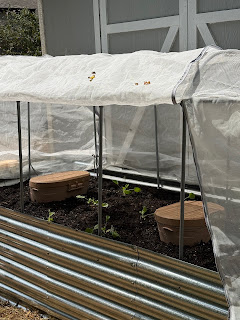
I installed both Vego worm composters directly into the bed, positioned so I can easily reach the handles from the outside. They’ll eventually be filled with bedding, kitchen scraps, and worms, who will hopefully ignore the fact that I have now assigned them full-time employment in the garden.

I also planted six Brussels sprouts.

They came as a six-pack, and since my son also loves Brussels sprouts, all six went in. I spaced them about 12 inches in from the edges of the bed and gave them as much room as I reasonably could while still leaving space for everything else I apparently intend to cram in here.

So now the bed that started out as cardboard, sticks, old grass, straw, and an absolutely unreasonable amount of dirt actually has food growing in it.

The worm towers are in place. The Brussels sprouts are planted. The mesh cover is on.

Main Bed Covered


The main garden bed needed a cover because apparently everything in my yard would also like to participate in the garden. I have raccoons, skunks, opossums, cats, and other wildlife around that I’d like to keep out.

I bought the Vego mesh cover, which seemed like a great idea right up until I discovered one small problem: the cover is designed for Vego’s rounded/oval beds.

My bed is rectangular.

Very rectangular.

So the nice rounded cover and the square corners of my bed were never going to be a perfect match. I tried fitting it over the outside first, moved it around, stared at it for a while, and eventually decided that if the cover wasn’t going to fit the bed properly, I was just going to make it fit.

I moved the whole thing inside the bed instead of around the outside and ran a bungee around the bottom to hold the mesh against the frame.

That actually worked surprisingly well.

There are still little triangular gaps at the corners because, again, ROUND COVER. SQUARE BED. But it’s secure, it looks much neater this way, and it should keep most of the things I don’t want eating my plants away from them.

Will a determined raccoon consider those corner gaps an invitation?

For now, I’m calling it good.

Thornless Blackberry


I found this thornless blackberry bush at Home Depot for $14.99 in the ‘last chance’ section and obviously it had to come home with me.

I wasn’t actually at Home Depot looking for a blackberry bush, but that really doesn’t seem to matter anymore. Apparently I just go to the garden center now and plants follow me home.

It’s a thornless blackberry, which was definitely a selling point because I like blackberries but I don’t particularly enjoy being attacked while trying to pick them.

I planted it in its own big round container near the root garden bed, where it can have plenty of room to grow without taking over everything around it. Eventually I’ll give it some support as the canes get longer, but for now it seems perfectly happy settling into its new home.

For $14.99, I figured it was worth a try. If it does well, I’ll have fresh blackberries right outside. If it doesn’t, well, I’m out about the cost of yet another bag of dirt, and at this point I have completely lost track of how many of those I’ve bought anyway.

Of course, buying one blackberry plant has already led to me looking at other varieties because apparently one berry bush was never going to be the end of this.


Setting it all up


What started as a plan to grow some greens for the fall and winter officially became a construction project..

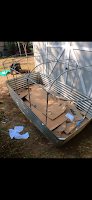
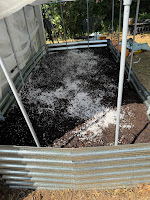
The first big garden bed went in beside the shed, in a spot that gets morning sun and bright shade through much of the rest of the day. Rather than simply filling the entire thing with bags of expensive soil, I built it up in layers using materials I already had around the yard wherever possible.

First came cardboard over the ground, followed by sticks and woody material. Then went in old grass and partially composted material from a pile that had been sitting around doing absolutely nothing useful until I suddenly decided it was treasure. That was watered thoroughly before adding straw, which was also watered and tamped down.

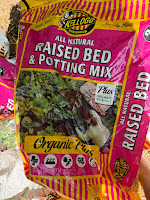
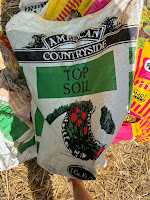
Finally came the soil.

And more soil.

And then, somehow, more soil.

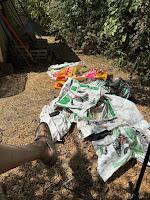
There were multiple trips for dirt because apparently one of the fundamental laws of raised-bed gardening is that however much soil you think you need, you are wrong.

By this point, ChatGPT and I were no longer talking about “layers.” We were discussing the stratigraphy of the bed like archaeologists examining an ancient settlement.

So this is the beginning, the first bed, the first layers, and the point at which a simple plan to grow some winter greens started becoming something considerably larger.